
If you’ve ever wondered why fiber internet is faster and more reliable than cable or DSL, the answer comes down to one simple difference: fiber sends your data as pulses of light instead of electrical signals. That single change unlocks speeds, reliability, and future headroom that older technologies simply can’t match.
Here’s a breakdown of how fiber internet actually works, from the strand of glass in the cable to the router in your home, including how that cable gets to your house in the first place.
What Makes Fiber Different From Cable and DSL
Traditional cable and DSL connections rely on copper wiring to carry data as electrical signals. Copper has real limitations: signals degrade over distance, they’re vulnerable to interference from weather and nearby electronics, and there’s a hard ceiling on how much data they can carry at once.
Fiber optic cable solves these problems by using light instead of electricity. Each fiber strand is a hair thin thread of glass, thinner than a human hair, that carries data as pulses of light generated by a laser or LED. Light doesn’t degrade over distance the way electrical signals do, and it isn’t affected by electromagnetic interference. That’s why fiber can deliver symmetrical gigabit speeds (equally fast uploads and downloads) with a level of consistency copper was never designed for.
The Journey of Your Data: From the Network to Your Router
Understanding fiber internet means understanding the path data takes to reach your home:
- Optical Line Terminal (OLT): Your internet provider’s network starts at a facility where an OLT converts data into pulses of light.
- Fiber optic cable: Those light pulses travel through fiber cable, either strung along utility poles or buried underground, until they reach your neighborhood.
- Optical Network Terminal (ONT): At your home, a small device called an ONT converts the light signal back into an electrical or digital signal your router can use.
- Your home network: From there, your router distributes the connection to your devices over Wi-Fi or Ethernet, just like any other internet connection.
This is why fiber can move so much data so quickly. Light travels through the glass strand with minimal loss, meaning the signal arriving at your home is nearly as strong as the one that left the network facility, even across long distances.
How Fiber Gets to Your Home: Aerial vs. Buried Construction
One of the most common questions people have isn’t about the technology itself, it’s about how the cable physically reaches their street. There are two main construction methods, and the right one depends on the neighborhood, the terrain, and local infrastructure.
Aerial Fiber
Aerial fiber is strung along existing utility poles, the same poles that often carry electric and telephone lines. Crews attach the fiber cable to the poles at a regulated height and run it from pole to pole down the street before connecting a drop line to each home.
Aerial construction tends to be faster to deploy and less disruptive to yards and driveways, since there’s no need to dig. It works especially well in areas where utility poles already exist and have available space for a new line.
Buried Fiber
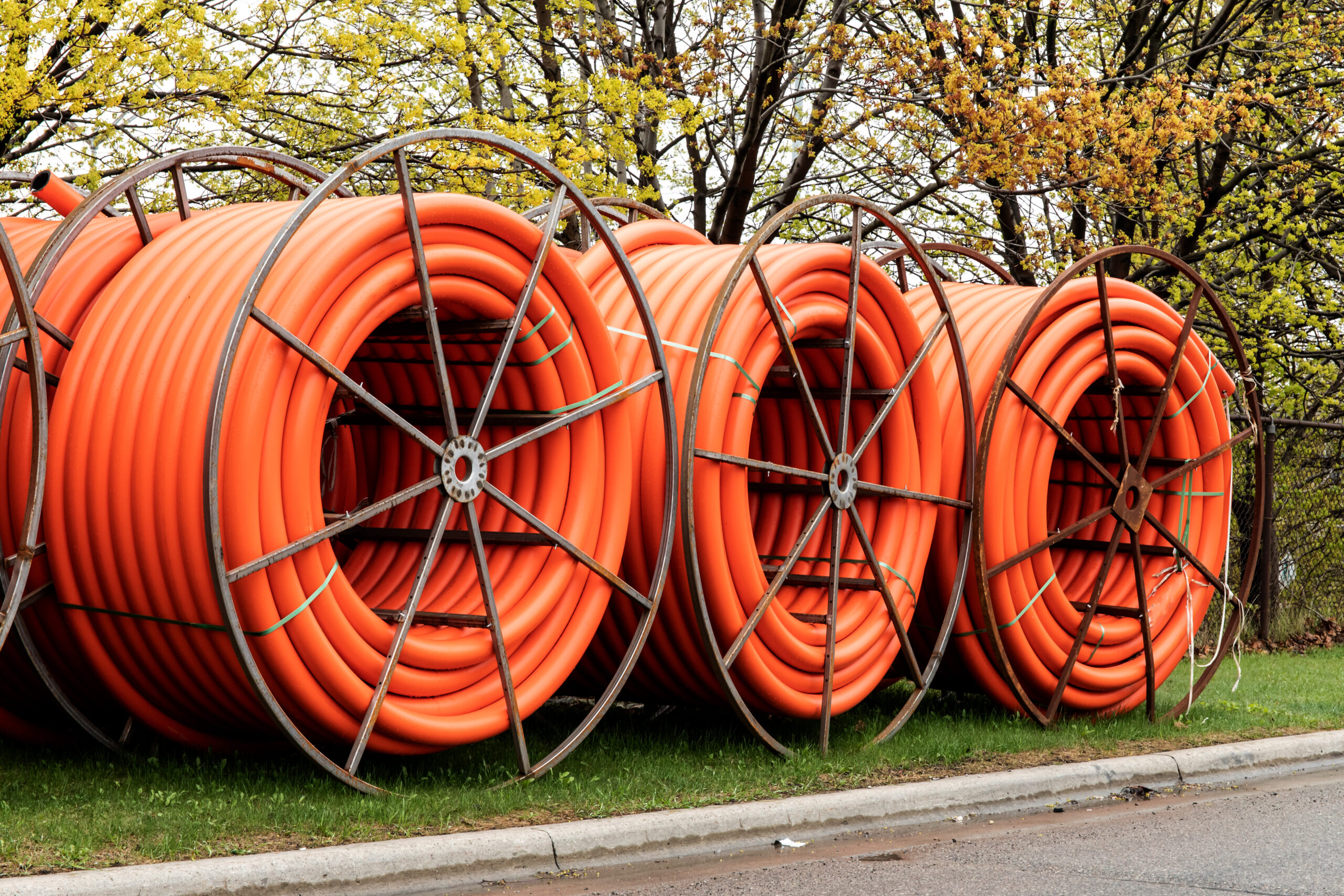
Buried fiber is installed underground, either through open trenching or directional boring (a method that pulls cable through a narrow underground path without disturbing the surface). Buried lines are protected from weather, wind, and falling debris, which can make them a good fit for areas prone to storms or for neighborhoods where poles aren’t available or where local ordinances require underground utilities.
Buried construction generally takes more time and coordination, since crews need to account for existing underground utilities like water, gas, and electric lines before digging. But once installed, buried fiber tends to require less ongoing maintenance since it isn’t exposed to the elements.
Most fiber providers, including regional ISPs building out new markets, use a mix of both methods within the same project. The choice usually comes down to what’s already in the ground or on the poles in a given area, along with permitting requirements from the city or county.
Why Fiber Construction Takes Time
Fiber builds are a bigger undertaking than a simple equipment swap. Before any cable goes up on a pole or into the ground, providers typically need to:
- Design the network route for the area
- Secure permits from local governments and, for aerial builds, pole attachment agreements with utility companies
- Coordinate with other utilities to avoid conflicts underground
- Run the actual construction, whether aerial stringing or buried trenching and boring
- Test and activate the network before customers can connect
This is why fiber expansion happens market by market rather than all at once. A provider building fiber in a new town is laying physical infrastructure that will serve that community for decades, not just flipping a switch on existing lines.
Why Fiber Is Worth the Investment
Once fiber is in the ground or on the pole, the benefits are significant:
- Faster speeds: Fiber supports multi-gigabit speeds that copper networks can’t approach.
- Symmetrical upload and download: Video calls, cloud backups, and remote work all benefit from upload speeds that match download speeds.
- Greater reliability: Fiber is less susceptible to weather interference and signal degradation.
- Future-ready capacity: As households add more connected devices, fiber has the headroom to keep up without a network upgrade.
Frequently Asked Questions
Is fiber internet available everywhere?
Fiber availability depends on whether a provider has built the necessary infrastructure, aerial or buried, to a specific area. Providers are continually expanding their fiber footprint into new communities.
Does buried fiber work better than aerial fiber?
Both methods deliver the same speed and performance once installed. The choice between them comes down to local terrain, existing infrastructure, and permitting requirements rather than any difference in internet performance.
How long does it take to build fiber to a new neighborhood?
Timelines vary based on permitting, terrain, and whether the build is aerial or buried, but most fiber construction projects take several months from planning to activation.
What happens if fiber cable is damaged?
Because fiber carries data as light rather than electricity, providers can often pinpoint a break in the line more precisely than with copper, which typically means faster repair times.
Curious whether fiber construction is coming to your neighborhood? Reach out to learn more about upcoming fiber expansion in your area.

