
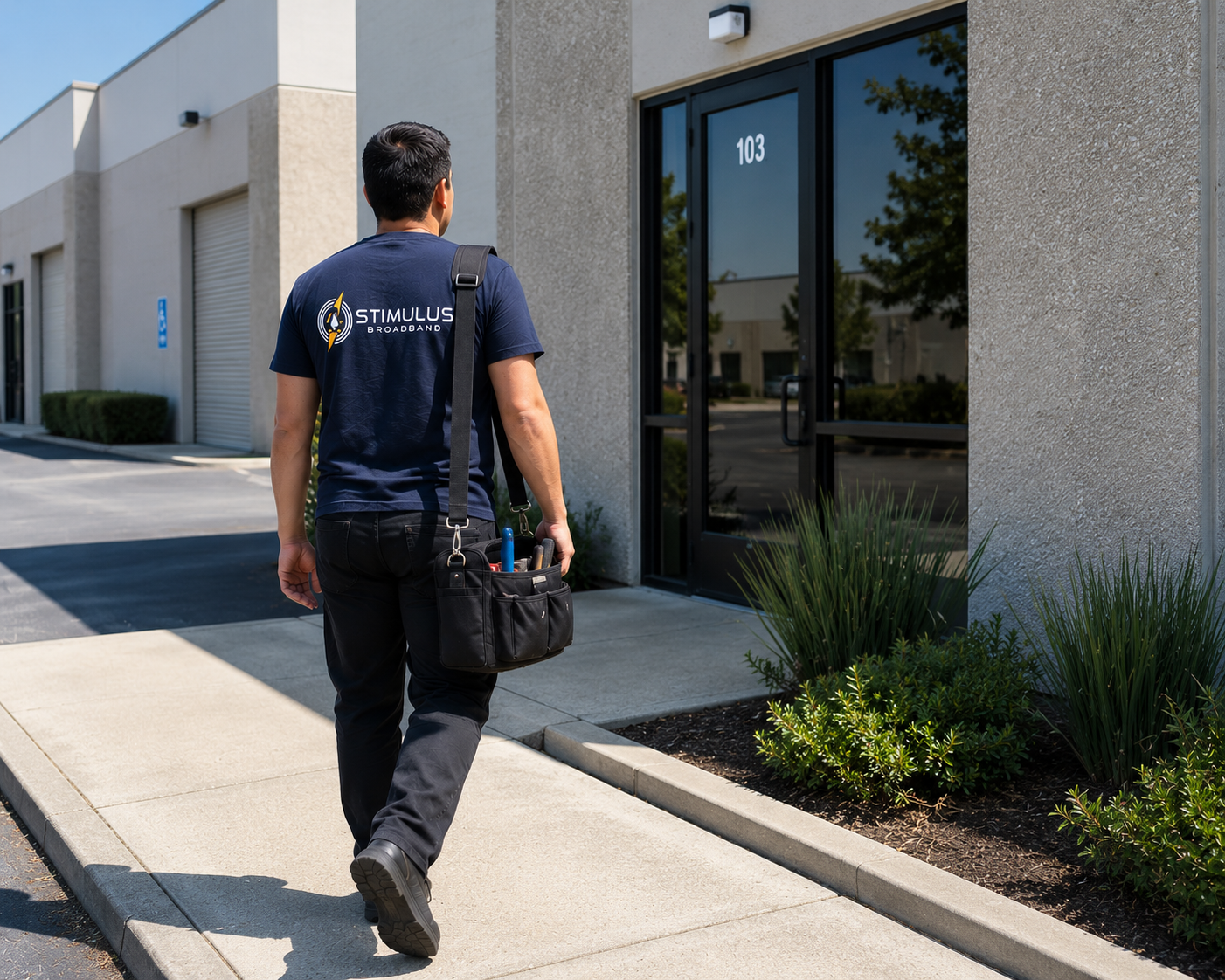
When it’s time to sign up for home internet, most people default to whichever national carrier they’ve heard of, the one with the ads on TV or the truck that seems to be everywhere. But if you live outside a major metro area, that default often isn’t the best one. A local provider like Stimulus Broadband operates differently in ways that actually matter day to day.
Support from people who know your area
Call a national carrier’s support line and you’re usually routed to a call center that could be anywhere in the country, sometimes anywhere in the world. The person on the other end is working from a script, has never seen your street, and has no particular reason to care whether your issue gets solved quickly. Call a local provider and you’re talking to someone who can picture the road you live on, who knows which parts of town have tricky terrain, and who has a real stake in getting it right because they might run into you at the grocery store next week.
That local knowledge matters more than people expect. A technician who knows that a certain hillside blocks signal, or that a particular neighborhood tends to have older wiring, can diagnose problems faster and avoid sending out a truck for something that could have been solved with one good question.
Faster response, less runaround
National carriers are built around scale, which means decisions get pushed through layers of regional and corporate approval. A local provider skips most of that. Technicians are based nearby, dispatch decisions happen quickly, and there’s no need to escalate a routine repair through three levels of management before someone shows up. That usually translates into shorter install windows and faster fixes when something goes down.
Networks built for the actual landscape
One of the biggest differences is technology strategy. National carriers tend to roll out the same solution everywhere because it’s easier to manage at scale, even when it’s not the right fit for a given area. A local provider has more flexibility to match the technology to the terrain: fixed wireless in areas where running fiber isn’t practical or would take years to permit and trench, and fiber where the density and demand justify it. That flexibility means rural and semi-rural communities aren’t stuck waiting for infrastructure that a national carrier will never prioritize.
Investment that stays local
A local ISP’s success is tied directly to the health of the communities it serves, which shows up in ways big carriers rarely bother with. That includes sponsoring community events, showing up at local fairs and celebrations, hiring technicians and support staff who live in the area, and building out infrastructure designed to last in that specific place rather than treating it as one data point in a national footprint.
Plans without the national playbook
Long-term contracts, surprise fees, and confusing bundles are common tactics among national carriers, in part because the customer relationship is impersonal enough that it can absorb the friction. Local providers tend to keep pricing simpler and more transparent, because trust is harder to fake when your customers are also your neighbors.
The bottom line
None of this means big national carriers don’t have their place, especially in dense urban markets where their scale is an advantage. But for communities that have been treated as an afterthought, a local provider that actually understands the area tends to deliver a better experience: faster support, more appropriate technology, and a relationship that doesn’t feel like shouting into a call center queue.
If you’ve been stuck with a national carrier that barely seems to know your address exists, it’s worth checking what’s actually available near you. Check out Stimulus Broadband’s coverage today!

